
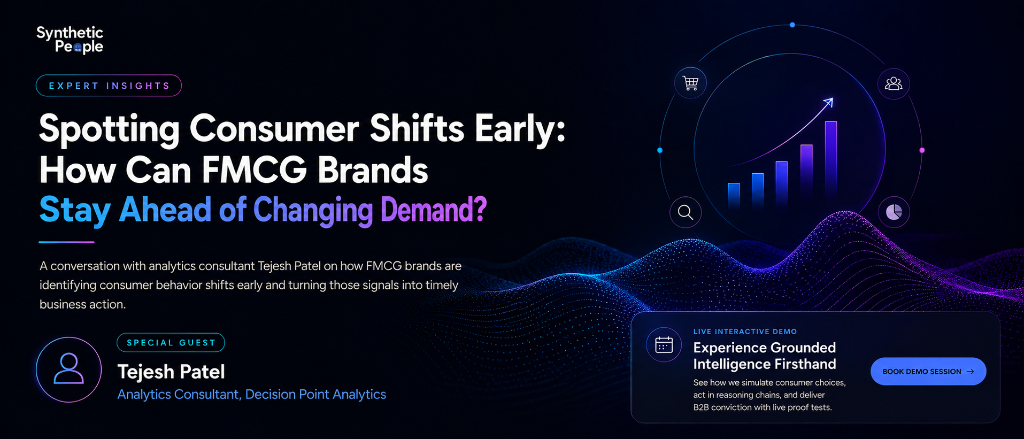
A lot of teams can see the data, but fewer can interpret what it actually means. How do you connect emerging shopper data with the real-world context behind consumer decisions?
Data tells us what changed, but context explains why. We connect POS data, digital signals, retailer feedback, and category trends with external factors like inflation, weather, cultural moments, and channel dynamics. The goal is to move beyond identifying a trend and understand the consumer need driving it. The strongest insights come when data and human behavior are analyzed together.
Consumers often change behaviour before they can clearly explain why. How can insight teams spot these shifts early before they show up in surveys or sales reports?
Early signals often appear in search trends, online conversations, basket composition changes, retailer inquiries, and shifts in channel performance. Research suggests behavioral data can reveal emerging trends weeks before traditional surveys. The key is to monitor leading indicators continuously rather than rely solely on lagging sales metrics.
Speed matters in FMCG. Once your team identifies a demand shift, what helps move that insight into a business decision fast enough to actually matter?
Speed comes from simplifying decision-making. Insight teams should focus on the business implication, not just the analysis. Clear dashboards, predefined action thresholds, and close collaboration between commercial, supply chain, and marketing teams help translate signals into action. A good insight is only valuable if it drives a timely decision.
Have you seen examples where a small behavioural signal turned into a major category shift later? What should brands pay closer attention to earlier?
Health-conscious snacking, low-sugar beverages, and quick-commerce adoption all started as niche signals before becoming mainstream. Brands should pay closer attention to emerging behaviours among younger consumers, premium segments, and digital-first shoppers, as these groups often signal where broader demand is heading next.
Where do you think traditional consumer research still adds the most value, and where do brands now need faster, more continuous ways of understanding behaviour?
Traditional research remains highly valuable for understanding motivations, perceptions, and unmet needs. However, consumer behavior today changes faster than quarterly studies can capture. Brands need continuous measurement through transactional, digital, and shopper data to complement periodic research and maintain a real-time understanding of demand.
For commercial teams, there’s often tension between market instinct and what the dashboard says. How do you create confidence around acting on early consumer signals?
The best approach is combining data evidence with business experience. Rather than asking teams to trust a single metric, we validate signals across multiple sources and quantify potential impact. Confidence increases when insights are transparent, explainable, and connected to clear commercial outcomes.
Before investing in a product or campaign response, how can brands quickly test whether an emerging consumer shift is truly worth acting on?
Start small and learn fast. Pilot launches, retailer-specific activations, A/B testing, and limited geographic rollouts provide quick feedback without significant investment. The objective is to validate demand, repeat purchase behavior, and profitability before scaling nationally.
Even when insight teams catch consumer shifts early, organizations don’t always respond fast. What operational barriers slow FMCG brands down most?
The biggest barriers are siloed teams, lengthy approval processes, fragmented data sources, and competing priorities. In many organizations, the challenge isn't identifying the opportunity—it's aligning stakeholders quickly enough to act on it. Agility increasingly depends on organizational processes, not just analytics capabilities.
How do you see analytics and AI improving demand sensing today especially in helping brands move from reporting what happened to anticipating what’s next?
AI is helping brands shift from descriptive analytics to predictive decision-making. Advanced demand-sensing models can combine sales, retailer, pricing, weather, promotional, and digital data to identify potential demand changes earlier. Industry studies suggest AI-enabled forecasting can improve forecast accuracy by 20–30% while reducing inventory inefficiencies, allowing businesses to be more proactive than reactive.
From your perspective, what do the best FMCG insight teams do differently when it comes to spotting and responding to changing consumer demand ahead of competitors?
The strongest insight teams don't just report trends—they influence decisions. They combine multiple data sources, focus on leading indicators, stay close to commercial realities, and communicate insights in a way that drives action. Most importantly, they create a culture where experimentation and rapid response are part of the business, not separate from it.
Closing Thought
Competitive advantage in FMCG no longer comes from having more data—it comes from identifying meaningful signals faster, connecting them to real consumer behaviour, and acting before the market catches up.