
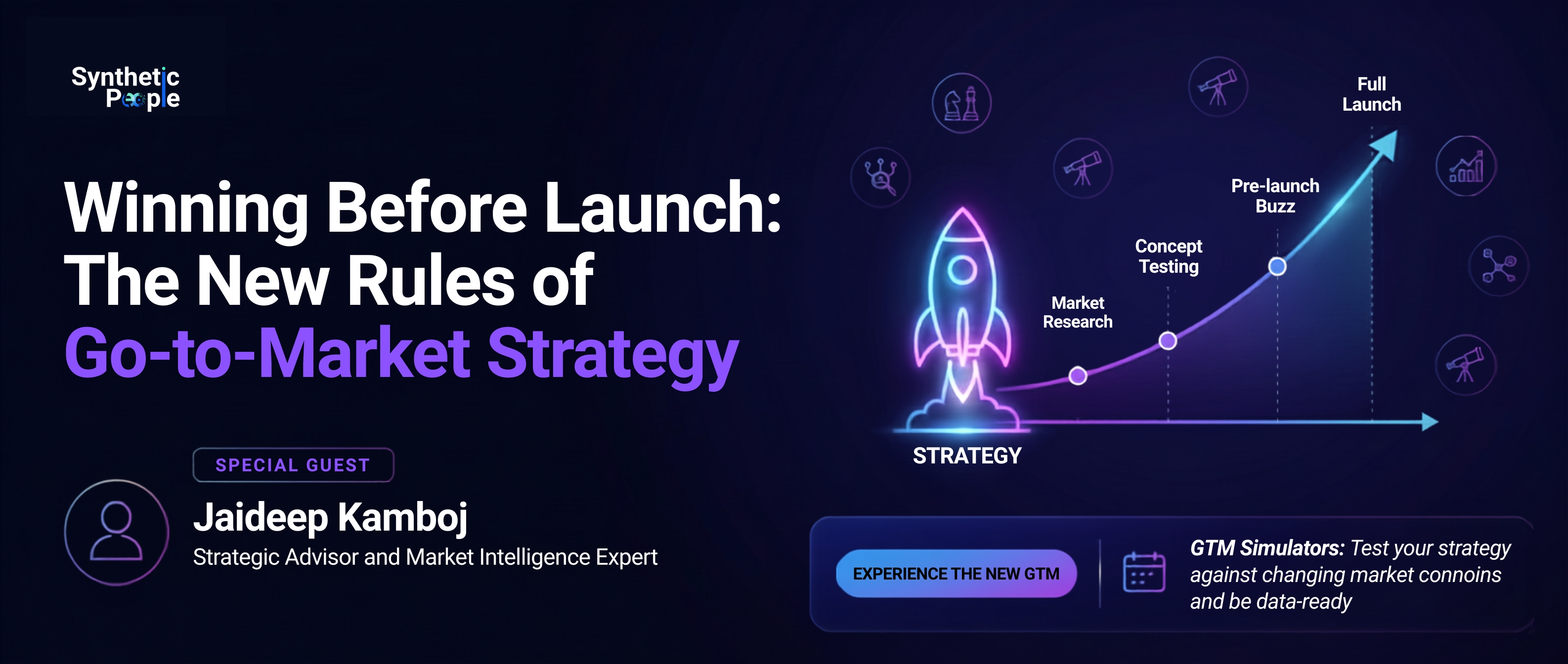
Looking back at the organizations you've worked with, what do you think separates successful product launches from the ones that never quite take off? Is there a common mistake you see businesses making before they enter the market?
A successful product launch doesn't guarantee a successful product. A launch is simply how a company introduces its product to the market. Success comes from solving a real customer problem and consistently delivering value.
It starts with understanding customer needs, identifying the right customer profile, building the right product, positioning it well, and choosing the right channels to reach customers. These efforts help acquire customers, but that's only the first step.
What really determines success is the customer's experience after the purchase. If customers trust the product, find value in it, and keep coming back, the product succeeds.
Even companies with plenty of resources can fail if they're only focused on making the first sale. In the long run, success comes from understanding customers, continuously improving the product, and building loyalty. The same applies to companies with limited resources. They just need to make smarter trade-offs and grow gradually.
A lot of companies say they know their customers because they have research and feedback. In your experience, what does real consumer understanding look like, and how does it change the way a business makes decisions?
Research and customer feedback are useful, but they don't always reflect the complete picture. I see them as tools to validate hypotheses and assumptions rather than absolute truths. Their accuracy depends on the research method and how well it's executed, so they can't fully represent your ideal customers.
Understanding real customers is much more complex. It's not just about demographics like age, income, or gender. You also need to understand their motivations, emotions, and behaviors. Emotions, in particular, influence many purchase decisions, and they're difficult to measure. That's why truly understanding customers is never straightforward.
Research and feedback can help segment customers, but identifying the right target audience ultimately depends on your product and the experience you want to create.
A good example is Maruti Suzuki in India. Many of its cars share the same platform and components, but the NEXA dealerships offer a different buying experience to appeal to a different customer segment. Similarly, packaged food brands often target different customer groups through changes in packaging, ingredients, pricing, and retail placement.
Before a company commits time and money to a new product or market, how should it test whether the opportunity is actually worth pursuing? What signs tell you the idea has real potential?
The first step is to validate whether the problem is real and important enough for customers to pay for a solution. Many ideas look promising on paper but fail because they don't solve a meaningful problem.
Based on my experience, I would start with market research, customer interviews, competitor analysis, and small experiments to validate the core assumptions. Instead of building the complete product, I'd create an MVP or prototype and collect feedback from early users. The objective is to learn quickly while keeping the investment low.
The strongest indicators of a good opportunity are genuine customer interest, repeated usage, positive referrals, and, most importantly, willingness to pay.
In many organizations, product, marketing, research, and leadership teams all see different pieces of the picture. How can they work together so that launch decisions are based on one clear view rather than separate opinions?
One solution is to create a unified framework where all cross-functional teams can collaborate effectively. It should provide a common platform to share ideas, discuss insights, and align on decisions. Instead of relying only on individual opinions or data, decisions should be guided by customer insights and success metrics that everyone agrees on.
Even the best product can fail if it solves the wrong problem or reaches the market at the wrong time. Before investing in a new product or entering a new market, what do you believe organizations should validate first to improve their chances of success? Could you share an example wherein getting this right or wrong made a significant difference?
The first step is to align the product with the right customer. In simple terms, it's about bringing the right product to the right customer at the right time. Everything else, like pricing, unit economics, distribution, and promotion, comes later.
A new product should first meet the basic expectations of the market. It should then offer features that are competitive while also introducing something unique that genuinely excites customers. Innovation should focus on creating that unique value while staying relevant to customer needs and market trends.
A good example is Google Glass. When it was first launched, people admired the technology, but very few were willing to buy or wear it because the market wasn't ready. Today, with advancements in technology and changing consumer behavior, smart glasses are becoming more mainstream. The lesson is that even a great product can fail if it reaches the market too early. Success comes from delivering the right product to the right customer at the right time.
Some companies collect a lot of information, but very little of it turns into useful insight. What separates teams that just gather data from teams that consistently turn information into action? What role do tools and technology play in that process?
You've rightly pointed out that while organizations collect a lot of data, very little of it turns into useful, actionable insights. The reason is that not all data is valuable. Much of it is simply noise.
Meaningful data collection starts with a clearly defined problem, objective, or hypothesis. Once that's established, teams can focus on gathering only the relevant data, analyze it, and convert it into insights that support better decisions.
Tools and technology play a vital role in this process. They help teams identify patterns, track key metrics, automate repetitive tasks, and make analysis faster. But their real value comes from helping teams turn the right data into meaningful action.
Even a strong product can struggle if people do not immediately understand why it matters. How do you approach positioning so that the value is clear before launch? Are there any early signs that the message is landing?
Effective positioning starts with understanding the target customer, the problem being solved, and why the product is a better choice than existing alternatives. The value proposition should be simple, relevant, and easy to understand before the product reaches the market. Early signs that the positioning is working include customers signing up for trials or updates, engaging with the messaging, and showing a willingness to buy.
Markets can shift quickly while a product is still being built. How should companies stay flexible without losing momentum or changing direction too often? If you have seen this handled well, what did it look like?
From what I've observed, especially from a technology perspective, many companies have adopted an incremental approach to product development. Instead of building everything at once, they define a long-term vision and release improvements through frequent updates. They also design modular architectures and maintain a clear product roadmap. I believe this gives them the flexibility to respond to changing market needs without losing momentum.
A good example is Apple. The iPhone has evolved through incremental improvements over multiple generations rather than complete redesigns every year. Samsung follows a similar approach with its flagship S series. I've also seen this approach being adopted in the automotive industry. Tesla popularized modular, software-driven platforms, and many legacy automakers, including Volkswagen, now use scalable platforms that allow them to introduce new models and features with minimal changes while adapting to market demands.
AI is becoming part of almost every stage of business planning. Where do you think it can make the biggest difference before a product goes live, and where do you still think people need to make the final call?
I think AI can make the biggest difference by accelerating research, analyzing large volumes of data, identifying patterns, predicting trends, and generating insights much faster than traditional methods. It can also help with customer segmentation, demand forecasting, competitor analysis, pricing, and even testing different product or marketing ideas before launch.
However, I don't think AI should make the final decisions. Product strategy, prioritization, customer empathy, ethical considerations, and major business decisions still require human judgment. AI is a powerful decision-support tool, but people should always make the final call, especially when decisions involve uncertainty, trade-offs, or customer experience.
Looking back on your career, what is one lesson about launching products or entering new markets that you wish more business leaders took seriously? Why does that lesson matter so much?
One lesson I've learned is that a great product alone doesn't guarantee success. What matters more is solving the right problem for the right customers at the right time. Many companies invest heavily in building products but spend less time validating customer needs and market fit.
I also believe businesses often overemphasize customer acquisition while underestimating customer retention. A successful launch isn't just about getting the first sale; it's about creating enough value that customers keep coming back. That's what builds sustainable growth, and it's a lesson I believe every business leader should take seriously.